Perforated metal is a versatile sheet material widely used in architecture, construction, industrial manufacturing, filtration, ventilation and equipment protection. By creating precisely arranged openings in metal sheets, perforated metal provides a practical combination of strength, airflow, light transmission and visual appeal.
Also known as perforated metal sheet, perforated metal plate, perforated sheet metal or perforated metal screen, this product can be manufactured in different materials, hole patterns, thicknesses and sizes. As an experienced perforated metal manufacturer, LantoMetal provides customized solutions for both architectural and industrial applications.
What Is Perforated Metal?
Perforated metal is a metal sheet that has been processed with punching, stamping, laser cutting or other precision methods to create a regular pattern of openings. The openings can be designed in different shapes and arrangements according to the required performance and appearance.
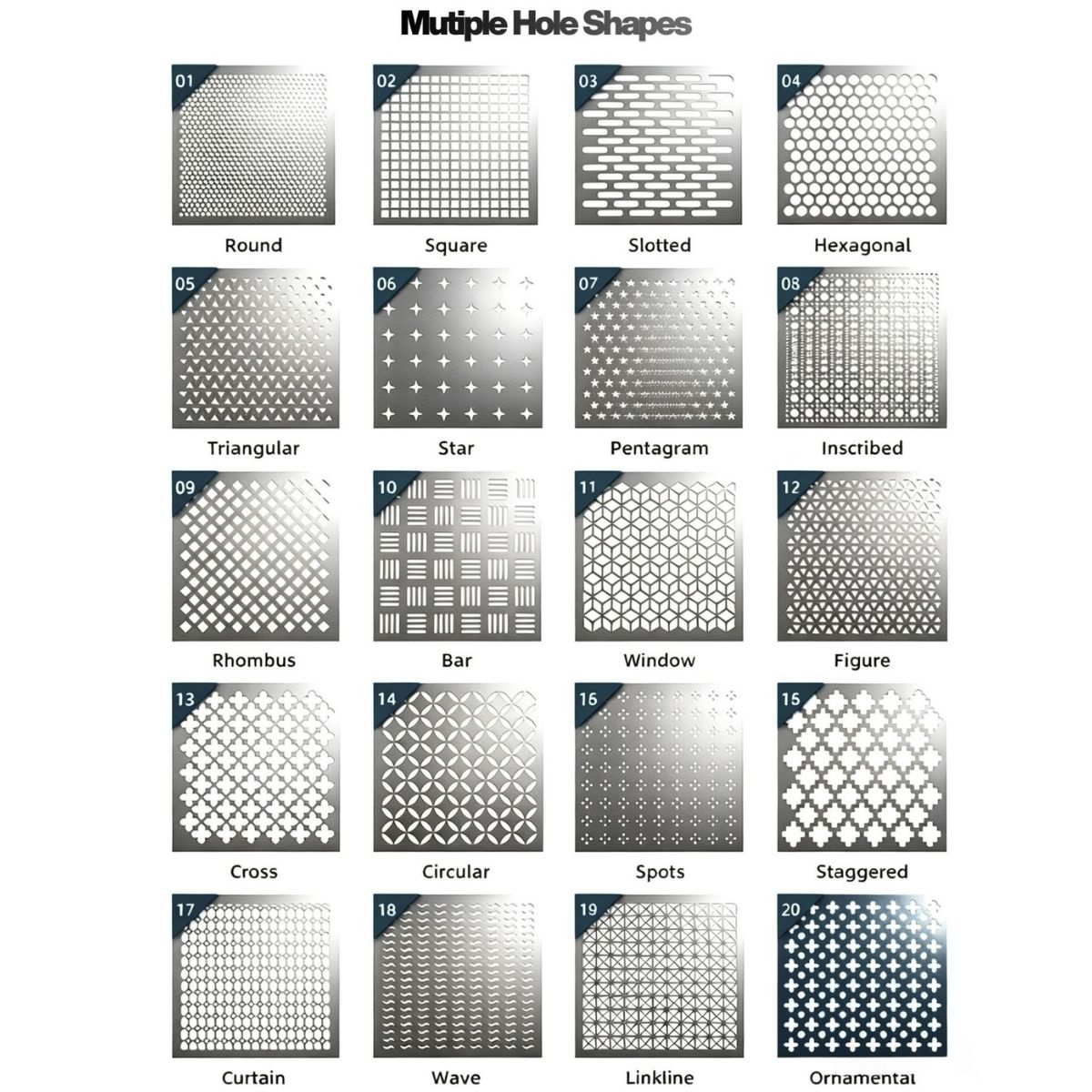
Common hole shapes include:
● Round holes
● Square holes
● Rectangular holes
● Slotted holes
● Hexagonal holes
● Decorative patterns
The size, spacing and arrangement of the holes determine the open area, airflow, light transmission, screening performance and overall appearance of the finished perforated metal sheet.
Common materials include stainless steel, carbon steel, galvanized steel and aluminum. For applications requiring high corrosion resistance, a stainless steel perforated sheet is often selected. When low weight and good corrosion resistance are important, an aluminum perforated sheet can be an excellent choice.
Types of Perforated Metal
Different projects require different material and design characteristics. Therefore, perforated metal panels are available in a wide range of configurations.
Stainless Steel Perforated Sheet
Stainless steel perforated sheet offers excellent corrosion resistance, strength and durability. It is commonly used in food processing, chemical equipment, filtration, ventilation and architectural applications.
Grades such as 304 and 316 stainless steel can be selected according to the working environment and corrosion requirements.
Aluminum Perforated Sheet
Aluminum perforated sheet is lightweight, corrosion resistant and easy to fabricate. It is widely used for architectural façades, ceiling panels, sunshade screens, ventilation panels and decorative applications.
Its low weight can also help reduce the overall load of building structures.
Galvanized Perforated Metal
Galvanized perforated metal combines the functionality of perforated sheet metal with the corrosion protection provided by a zinc coating. It is commonly used for industrial equipment, ventilation systems, machine guards and general screening applications.
Carbon Steel Perforated Metal
Carbon steel is another economical option for perforated metal plate applications where high strength is required. Depending on the environment, the finished product can be supplied with suitable surface treatments such as powder coating or galvanizing.
How Is Perforated Sheet Metal Made?
The manufacturing process of perforated sheet metal begins with selecting the appropriate metal sheet based on the required thickness, material and application.
1. Sheet Preparation
The raw metal sheet is inspected and cut to the required dimensions before perforation. Sheet thickness is normally specified in millimeters, and the selected thickness affects the strength, weight and processing performance of the final product.
2. Mechanical Punching
Mechanical punching is one of the most common methods used to manufacture perforated metal sheet.
During the process, specially designed punches and dies create openings in the metal sheet. CNC punching equipment can produce accurate and repeatable hole patterns while maintaining consistent dimensions across large quantities.
This method is suitable for round, square, rectangular and slotted holes.
3. Rotary Perforation
Rotary perforation uses a rotating cylinder fitted with precision punching pins. As the sheet passes through the machine, the pins continuously create openings in the material.
This process is suitable for continuous production and repeating hole patterns.
4. Laser Processing
Laser processing provides a high level of precision and design flexibility. It is particularly useful when a project requires complex patterns, special shapes or tight dimensional tolerances.
Although laser processing can be more expensive than conventional punching, it provides greater flexibility for custom perforated metal and architectural designs.
Common Hole Patterns and Open Area
Hole pattern is an important factor when selecting perforated metal panels.
Round holes are widely used because they provide a good balance between strength and open area. Square and rectangular holes are often selected for industrial screening, while slotted openings can provide specific airflow or screening characteristics.
The hole arrangement can be:
● Straight row
● Staggered row
● Customized geometric pattern
The open area refers to the percentage of the sheet surface occupied by openings. By changing the hole diameter and spacing, manufacturers can control airflow, light transmission, acoustic performance and screening efficiency.
Advantages of Perforated Metal
The popularity of perforated metal sheet comes from its combination of functional and aesthetic properties.
Good Ventilation
The openings allow air to move through the sheet, making perforated metal suitable for ventilation panels, machinery guards, building façades and equipment enclosures.
Light and Sun Control
Architectural perforated metal can reduce direct sunlight while still allowing natural light and air to pass through. This makes it useful for building façades, sunshade screens and exterior architectural panels.
Strength and Lightweight Design
Compared with a solid metal plate of the same overall dimensions, perforation can reduce material weight while retaining useful structural strength.
Modern Appearance
Different hole shapes, patterns and surface finishes allow perforated metal panels to become both functional components and decorative architectural elements.
Easy Customization
One of the major advantages of custom perforated metal is the ability to adjust the product according to project requirements.
Customization can include:
● Material
● Thickness
● Hole shape
● Hole diameter
● Hole spacing
● Open area
● Sheet size
● Surface finish
Applications of Perforated Metal
Because of its versatility, perforated metal is used in many industries.
Architectural and Construction Applications
Architectural perforated metal is increasingly used in modern building design. Typical applications include:
● Building façade panels
● Sunshade screens
● Ceiling panels
● Decorative wall panels
● Balcony screens
● Railing panels
● Ventilation screens
Perforated metal allows architects to combine visual design with practical functions such as shading, ventilation and privacy.
Industrial Applications
Industrial perforated metal is commonly used for:
● Machine guards
● Equipment enclosures
● Safety screens
● Ventilation panels
● Industrial screening
● Protective covers
● Conveyor equipment
Its open structure allows airflow while providing physical protection and separation.
Filtration and Screening
Perforated metal for filtration and screening applications can be used as a supporting or screening component in industrial equipment.
Applications include:
● Liquid filtration
● Gas filtration
● Grain screening
● Mining and mineral separation
● Chemical processing
● Food processing equipment
Different hole sizes and open areas can be selected according to the required screening performance.
Food and Beverage Processing
Stainless steel perforated sheet is particularly suitable for food and beverage processing because of its corrosion resistance, durability and easy-to-clean surface.
Typical applications include:
● Baking trays
● Drying equipment
● Sorting machines
● Drainage panels
● Brewing equipment
● Food processing machinery
Automotive and Transportation
Perforated sheet metal can also be found in automotive and transportation applications, including ventilation components, radiator grilles, protective panels, acoustic systems and equipment covers.
Surface Treatments for Perforated Metal
Surface treatment can improve corrosion resistance, appearance and service life depending on the material and application.
Common options include:
● Hot-dip galvanizing
● Electro-galvanizing
● Powder coating
● PVDF coating
● Anodizing
● Brushed finish
● Polished finish
For outdoor architectural applications, powder coating, PVDF coating or anodizing can be selected according to the material and environmental conditions.
How to Choose the Right Perforated Metal?
When selecting a perforated metal supplier, buyers should consider more than just price. The material, thickness, hole pattern, open area, surface treatment and manufacturing accuracy should all match the intended application.
Important factors include:
Material: Choose stainless steel, aluminum, carbon steel or galvanized steel according to corrosion resistance and strength requirements.
Hole size and pattern: Select the appropriate hole diameter, shape and spacing according to airflow, screening, filtration or decorative requirements.
Thickness: The sheet thickness should provide sufficient strength for the intended application.
Open area: A higher open area can provide greater airflow and light transmission, while a lower open area can provide greater coverage and screening.
Surface treatment: Outdoor or corrosive environments may require additional surface protection.
Custom Perforated Metal from LantoMetal
As a professional perforated metal manufacturer and supplier, LantoMetal provides custom perforated metal for construction, architecture, industrial manufacturing, filtration and equipment applications.
We can customize perforated metal sheets, perforated metal plates and perforated metal panels according to customer drawings and technical requirements, including material, thickness, hole shape, hole size, pitch, open area, dimensions and surface treatment.
Whether you need stainless steel perforated sheet for food processing and filtration, aluminum perforated sheet for architectural façades, or galvanized perforated metal for industrial applications, LantoMetal can provide suitable perforated metal solutions for your project.
Contact LantoMetal for customized perforated sheet metal and professional manufacturing support.