Expanded aluminum mesh is a versatile metal mesh product manufactured by simultaneously slitting and stretching aluminum sheets through specialized machinery. This process creates a continuous diamond-shaped mesh structure without welding or weaving, providing a combination of lightweight construction, strength, ventilation, and visual appeal.
As a type of expanded metal mesh, expanded aluminum mesh can be manufactured in different mesh sizes, strand widths, thicknesses, and opening patterns to meet specific application requirements. Besides aluminum, expanded metal can also be produced from carbon steel, stainless steel, copper, and other metal materials.
Today, aluminum expanded metal is widely used in architectural facades, ceilings, fences, walkways, filtration systems, equipment protection, and other construction and industrial applications.
What Is Expanded Aluminum Mesh?
Expanded aluminum mesh is produced from a solid aluminum sheet. During manufacturing, the sheet is simultaneously cut and stretched to create uniform openings. The resulting structure forms a series of interconnected diamond-shaped openings, while the original sheet remains continuous throughout the mesh.
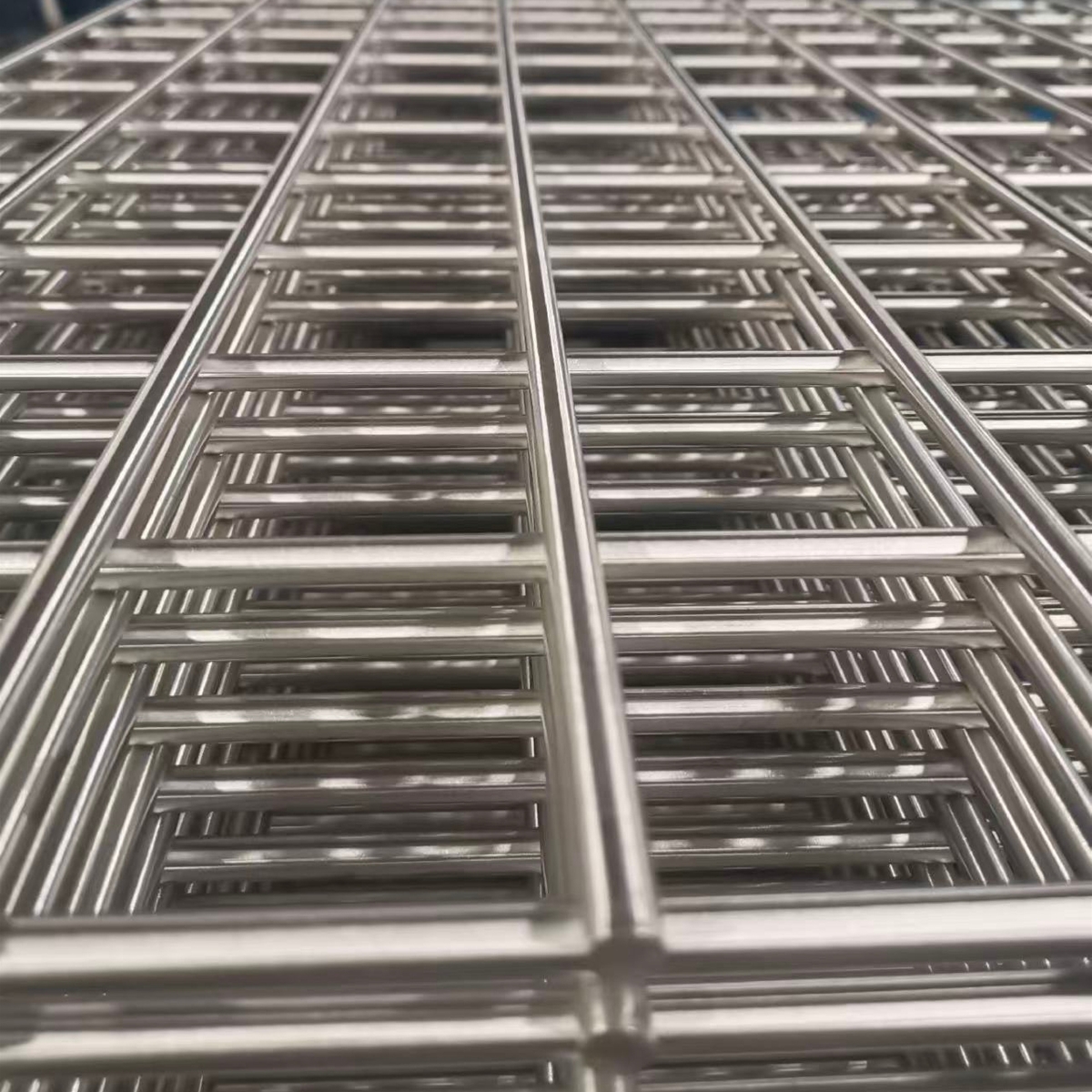
Unlike welded wire mesh, expanded metal mesh does not require welding points. Its integrated structure provides good rigidity while keeping the material relatively lightweight.
Depending on the application, expanded aluminum mesh can be supplied in different specifications, including mesh opening, strand width, strand thickness, sheet size, and open area.
Types of Aluminum Expanded Mesh
Different types of aluminum expanded mesh can be selected according to structural, architectural, filtration, and safety requirements.
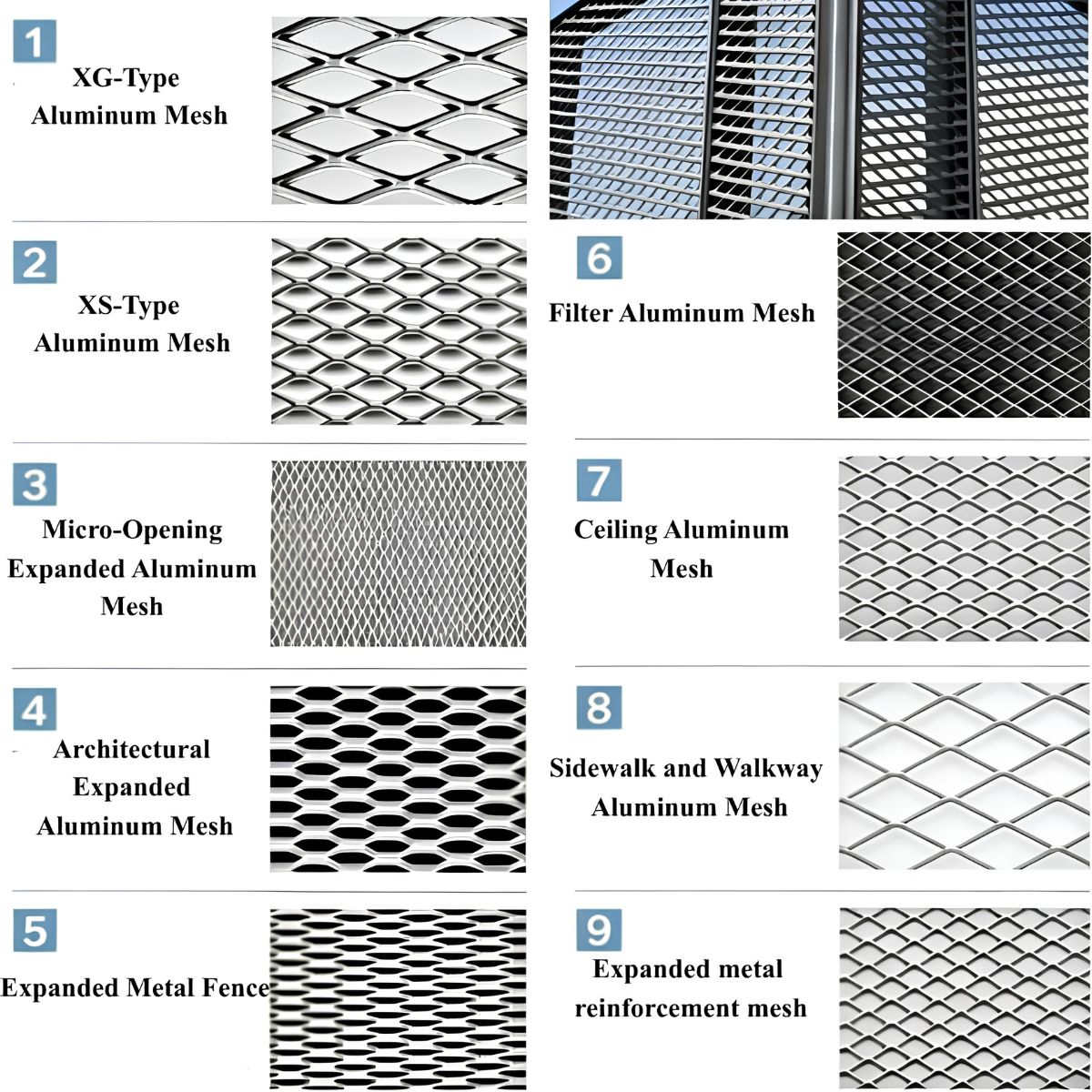
1. XG-Type Aluminum Mesh
XG-type aluminum mesh is a general-purpose expanded metal specification designed according to commonly used international standards and dimensions, including CNS, IS, and BSI specifications.
With its combination of structural strength, safety, and reliable performance, XG-type expanded metal is suitable for public works, building protection, walkways, fencing, and other general-purpose applications.
2. XS-Type Aluminum Mesh
XS-type aluminum expanded mesh provides a practical and cost-effective solution for applications where lower weight is important.
It is available in dimensions similar to XG-type mesh while using less material, making it suitable for window protection, building perimeters, partitions, and lightweight fencing applications.
3. Micro-Opening Expanded Aluminum Mesh
Micro-opening expanded aluminum mesh features very small openings and is designed for applications requiring controlled airflow, light transmission, sound management, or specialized surface structures.
Depending on application requirements, micro-opening expanded metal can be manufactured from aluminum, mild steel, stainless steel, copper, nickel, titanium, and other alloys.
4. Architectural Expanded Aluminum Mesh
Architectural expanded aluminum mesh is developed specifically for modern building facades, exterior walls, decorative screens, and curtain wall systems.
Its diamond-shaped pattern creates a distinctive architectural appearance while allowing air and light to pass through the mesh. It can also be used for sun shading, ventilation, privacy screens, balcony panels, and decorative building elements.
Architects and designers can select different mesh sizes, sheet dimensions, finishes, and installation methods to create customized visual effects.
5. Expanded Metal Fence
Expanded metal fence combines a continuous mesh structure with good visibility, ventilation, and physical protection.
The opening size and mesh dimensions can be customized according to project requirements. This makes expanded metal fencing suitable for building perimeters, industrial facilities, storage areas, equipment enclosures, and other security applications.
Compared with solid metal panels, the open structure can provide better airflow and visibility while maintaining a strong protective barrier.
6. Filter Aluminum Mesh
Aluminum expanded metal can also be used as a supporting or structural layer in filtration systems.
By controlling the opening size and open-area ratio, expanded metal can provide mechanical support for filter media while maintaining airflow or fluid flow. It can be combined with other filtration materials to form a stable filter structure.
This makes expanded aluminum mesh suitable for selected industrial filtration, ventilation, air intake, and protective filter applications.
7. Ceiling Aluminum Mesh
Expanded aluminum mesh is increasingly used in modern ceiling systems because of its lightweight structure, formability, ventilation, and decorative appearance.
It can be used for suspended ceilings, decorative ceiling panels, lighting integration, ventilation systems, and industrial-style interior design.
The open mesh structure allows air and light to pass through while creating a three-dimensional visual effect. Different mesh patterns and surface finishes can also be selected to match architectural design requirements.
8. Sidewalk and Walkway Aluminum Mesh
Expanded aluminum mesh can be used for walkways, platforms, and other pedestrian applications where a lightweight but rigid metal structure is required.
Its continuous construction provides good structural integrity, while the open mesh allows drainage and ventilation. Depending on the application, different thicknesses, mesh sizes, and surface treatments can be selected.
For industrial projects, expanded metal walkway panels can be used around equipment, platforms, access areas, and maintenance zones.
9. Brick-Wall Reinforcement Mesh
Expanded metal reinforcement mesh can be used in masonry, brick walls, plastering, and concrete construction to provide additional reinforcement and improve structural stability.
Its continuous metal structure offers good tensile strength and helps strengthen cement and masonry components. When properly selected and installed, reinforcement mesh can help reduce cracking caused by movement, impact, shrinkage, and other stresses.
It is suitable for brick-wall reinforcement, plaster reinforcement, concrete construction, and related building applications, providing a practical solution for improving the stability and durability of building structures.
Why Choose Expanded Aluminum Mesh?
Expanded aluminum mesh offers several advantages for both architectural and industrial applications:
Lightweight: Aluminum has a relatively low density, making expanded aluminum mesh easier to handle and install.
Continuous structure: The mesh is formed from one sheet without welded joints.
Good ventilation: Openings allow air to circulate efficiently.
Light transmission: The mesh can provide controlled light transmission for architectural applications.
Corrosion resistance: Aluminum provides good resistance to corrosion in many environments.
Customizable: Mesh size, strand width, thickness, sheet dimensions, and surface finish can be customized.
Versatile appearance: Diamond-shaped openings provide both functional and decorative value.
Cost-effective: The expanded manufacturing process makes efficient use of the original metal sheet.
Easy fabrication: The material can be cut, formed, flattened, and processed according to project requirements.
Applications of Expanded Aluminum Mesh
Because of its combination of strength, low weight, ventilation, and visual appeal, expanded aluminum mesh is used across a wide range of construction and industrial applications.
Typical applications include:
Architectural curtain walls
Building facades
Ceiling panels
Decorative screens
Sun-shading systems
Window protection
Expanded metal fencing
Walkways and platforms
Machine guards
Equipment protection
Filtration support
Ventilation systems
Industrial partitions
Brick-wall reinforcement
Storage and security enclosures
Custom Expanded Aluminum Mesh for Different Projects
The performance of expanded aluminum mesh depends on factors such as material grade, sheet thickness, SWD, LWD, strand width, open area, and overall panel dimensions.
For architectural projects, designers may prioritize appearance, transparency, ventilation, and surface finish. For industrial applications, structural strength, opening size, load requirements, and corrosion resistance may be more important.
LantoMetal provides custom expanded aluminum mesh for different construction and industrial requirements, with options for material, mesh dimensions, panel size, and processing. Whether you need architectural expanded metal for a building facade or aluminum mesh for fencing, ceilings, walkways, filtration support, or reinforcement, specifications can be customized according to your project requirements.